Elias Lönnrot
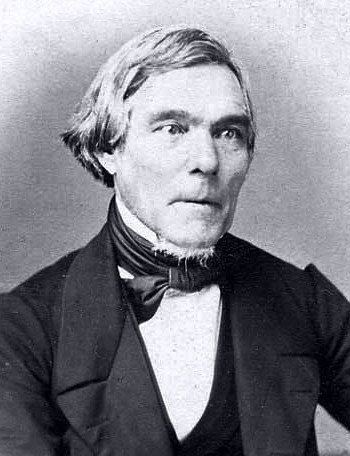
Elias Lönnrot (Finnish: [ˈeliɑs ˈlønruːt]; 9 April 1802 – 19 March 1884) was a Finnish polymath, physician, philosopher, poet, musician, linguist, journalist, philologist and collector of traditional Finnish oral poetry. He is best known for synthesizing the Finnish national epic, Kalevala (1835, enlarged 1849) from short ballads and lyric poems he gathered from Finnish oral tradition during several field expeditions in Finland, Russian Karelia, the Kola Peninsula and Baltic countries. In botany, he is remembered as the author of the 1860 Flora Fennica, the first scientific text written in Finnish rather than in Latin.
Lönnrot was born in Sammatti, in the province of Uusimaa, Finland, which was then part of Sweden. From 1814 to 1815, he attended the school of Tammisaari Pedagogio. He studied at Turku Cathedral School from 5 April 1816 until he dropped out in the spring of 1818. After dropping out, he worked as a tailor and singer in Sammatti and nearby villages. He joined the Porvoo Gymnasium on 20 March 1820 but left on 9 April. For the next two years, he studied as an apothecary student at Hämeenlinna. In the summer of 1822, he lived in Sammatti as he prepared for the high school examination. On 11 October 1822, he enrolled in the Academy of Turku to study medicine. The Great Fire of Turku coincided with his first academic year. As the university was destroyed in the fire, it was moved to Helsinki, the newly established administrative center of the Grand Duchy of Finland. Lönnrot followed and graduated in 1832.
Biography adapted from the Wikipedia article “Elias Lönnrot”, CC BY-SA. Read it there.