Walter Scott
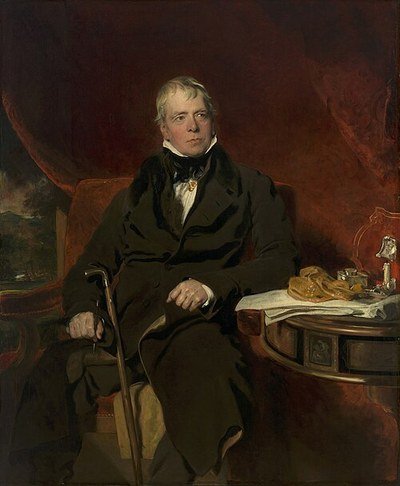
Sir Walter Scott, 1st Baronet (15 August 1771 – 21 September 1832), was a Scottish novelist, poet and historian. Many of his works remain classics of European and Scottish literature. He is known for his Waverley novels (1814–1831), which were, for nearly a century, among the most popular and widely read novels in Europe. He is also known for his narrative poems Marmion (1808) and The Lady of the Lake (1810). He greatly influenced European and American literature.
As an advocate and legal administrator by profession, he combined writing and editing with his daily work as Clerk of Session and Sheriff-Depute of Selkirkshire. He was prominent in Edinburgh's Tory establishment, active in the Highland Society, a long time president of the Royal Society of Edinburgh (1820–1832), and a vice president of the Society of Antiquaries of Scotland (1827–1829). His knowledge of history and literary facility equipped him to establish the historical novel genre as an exemplar of European Romanticism. He became a baronet of Abbotsford in the County of Roxburgh on 22 April 1820; the title became extinct upon his son's death in 1847.
Walter Scott was born on 15 August 1771 in a third-floor apartment on College Wynd in the Old Town, Edinburgh, a narrow alleyway leading from the Cowgate to the gates of the old University of Edinburgh. He was the ninth child (of which six died in infancy) of Walter Scott Senior (1729 – 1799), who was a member of a cadet branch of the Clan Scott and a Writer to the Signet. His mother was Anne Rutherford, who was a sister of Daniel Rutherford, who was a descendant both of the Clan Swinton and of the Scottish Haliburton family (whose prominent English members were to shorten their surname to 'Burton'). His maternal ancestry granted Scott the hereditary right of burial in Dryburgh Abbey.
Biography adapted from the Wikipedia article “Walter Scott”, CC BY-SA. Read it there.