Torquato Tasso
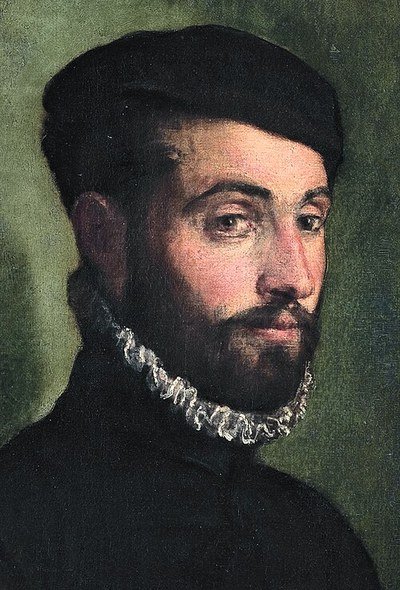
Torquato Tasso ( TASS-oh, also US: TAH-soh, Italian: [torˈkwaːto ˈtasso]; 11 March 1544 – 25 April 1595) was an Italian poet of the 16th century, known for his 1581 poem Gerusalemme liberata (Jerusalem Delivered), in which he depicts a highly imaginative version of the combats between Christians and Muslims at the end of the First Crusade, during the Siege of Jerusalem of 1099.
Tasso had a mental illness and died a few days before he was to be crowned on the Capitoline Hill as the king of poets by Pope Clement VIII. His work was widely translated and adapted, and until the beginning of the 20th century, he remained one of the most widely read poets in Europe.
Born in Sorrento, Torquato was the son of Bernardo Tasso, a nobleman of Bergamo and an epic and lyric poet of considerable fame in his day, and his wife Porzia de Rossi, a noblewoman born in Naples of Tuscan origins. His father had for many years been secretary in the service of Ferrante Sanseverino, Prince of Salerno, and his mother was closely connected with the most illustrious Neapolitan families. When, during the boy's childhood, the prince of Salerno came into collision with the Spanish government of Naples, being subsequently outlawed and deprived of his hereditary fiefs, Tasso's father shared his patron's fate. He was proclaimed a rebel to the state, along with his son Torquato, and his patrimony was sequestered. In 1552, Torquato was living with his mother and his only sister Cornelia at Naples, pursuing his education under the Jesuits, who had recently opened a school there. The precocity of intellect and the religious fervour of the boy attracted general admiration. At the age of eight, he was already famous.
Biography adapted from the Wikipedia article “Torquato Tasso”, CC BY-SA. Read it there.