Siegfried Sassoon
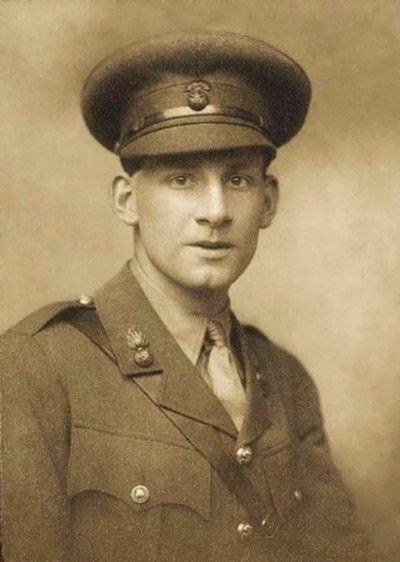
Siegfried Loraine Sassoon (8 September 1886 – 1 September 1967) was an English war poet, writer, and soldier. Decorated for bravery on the Western Front, he became one of the leading poets of the First World War. His poetry both described the horrors of the trenches and satirized the patriotic pretensions of those who, in Sassoon's view, were responsible for a jingoism-fuelled war. Sassoon became a focal point for dissent within the armed forces when he made a lone protest against the continuation of the war with his "Soldier's Declaration" of July 1917, which resulted in his being sent to the Craiglockhart War Hospital. During this period, Sassoon met and formed a friendship with Wilfred Owen, who was greatly influenced by him. Sassoon later won acclaim for his prose work, notably his three-volume, fictionalised autobiography, collectively known as the Sherston trilogy, which is made up of Memoirs of a Fox-Hunting Man (1928), Memoirs of an Infantry Officer (1930) and Sherston's Progress (1936). Sassoon is also known for his poetry collection The Old Huntsman (1917).
Siegfried Sassoon was born to a Jewish father and an Anglo-Catholic mother, and grew up in the neo-Gothic mansion named Weirleigh (after its builder Harrison Weir) in Matfield, Kent. His father, Alfred Ezra Sassoon (1861–1895), son of Sassoon David Sassoon, was a member of the wealthy Baghdadi Jewish Sassoon merchant family. Siegfried's mother, Theresa, belonged to the Thornycroft family, sculptors responsible for many of the best-known statues in London; among them her brother, Sir Hamo Thornycroft.
There was no German ancestry in Sassoon's family; his mother named him Siegfried because of her love of Wagner's operas. His middle name, Loraine, was the surname of a clergyman she respected.
Biography adapted from the Wikipedia article “Siegfried Sassoon”, CC BY-SA. Read it there.