Nizami Ganjavi
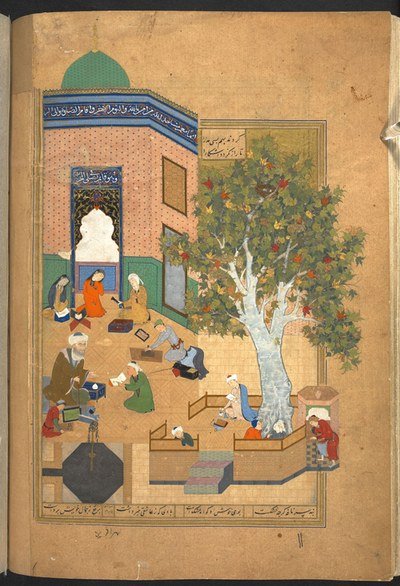
Nizami Ganjavi (Persian: نظامی گنجوی, romanized: Niẓāmī Ganjavī, lit. 'Niẓāmī of Ganja'; c. 1141 – 1209), Nizami Ganje'i, Nizami, or Nezāmi, whose formal name was Jamal ad-Dīn Abū Muḥammad Ilyās ibn-Yūsuf ibn-Zakkī, was a 12th-century poet. Nizami is considered the greatest romantic epic poet in Persian literature, who brought a colloquial and realistic style to the Persian epic. His heritage is widely appreciated in Afghanistan, Republic of Azerbaijan, Iran, the Kurdistan region and Tajikistan.
Born into a Persian family, his personal name was Ilyas and his chosen pen-name was Nizami (also spelled Nezami). He was born of an urban background in Ganja (Seljuq empire, now Republic of Azerbaijan) and is believed to have spent his whole life in the South Caucasus. According to De Blois, Ganja had a predominantly Iranian population at the time. The Armenian historian Kirakos Gandzaketsi (c. 1200 – 1271) mentions that "This city [Ganja] was densely populated with Iranians and a small number of Christians". Because Nizami was not a court poet, he does not appear in the annals of the dynasties. Tazkerehs, which are the compilations of literary memoirs that include maxims of the great poets along with biographical information and commentary of styles, refer to him briefly. Much of this material in these tazkerehs are based on legends, anecdotes, and hearsays. Consequently, few facts are known about Nizami's life, the only source being his own work, which does not provide much information on his personal life.
Biography adapted from the Wikipedia article “Nizami Ganjavi”, CC BY-SA. Read it there.