Luís de Camões
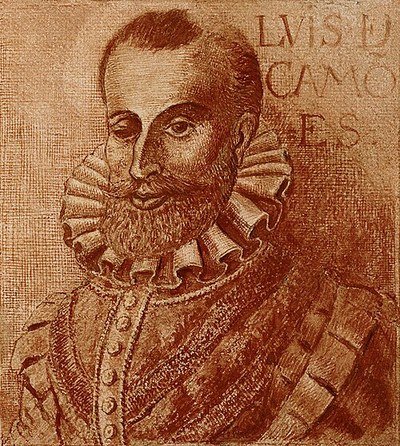
Luís Vaz de Camões (European Portuguese: [luˈiʒ ˈvaʒ ðɨ kaˈmõjʃ]; c. 1524 or 1525 – 10 June 1580), sometimes rendered in English as Camoens or Camoëns ( KAM-oh-ənz), was a Portuguese poet, considered Portugal's and the Portuguese language's greatest poet. His mastery of verse has been compared to that of Shakespeare, Milton, Vondel, Homer, Virgil and Dante. He wrote a considerable amount of lyrical poetry and drama but is best remembered for his epic work Os Lusíadas (The Lusiads). His collection of poetry The Parnasum of Luís de Camões was lost during his life. The influence of his masterpiece Os Lusíadas is so profound that Portuguese is sometimes called the "language of Camões".
The day of his death, 10 June, is Portugal's national day.
Much of the information about Luís de Camões' biography raises doubts and, probably, much of what circulates about him is nothing more than the typical folklore that is formed around a famous figure. Only a few dates are documented that guide its trajectory.
Biography adapted from the Wikipedia article “Luís de Camões”, CC BY-SA. Read it there.