Helen Hunt Jackson
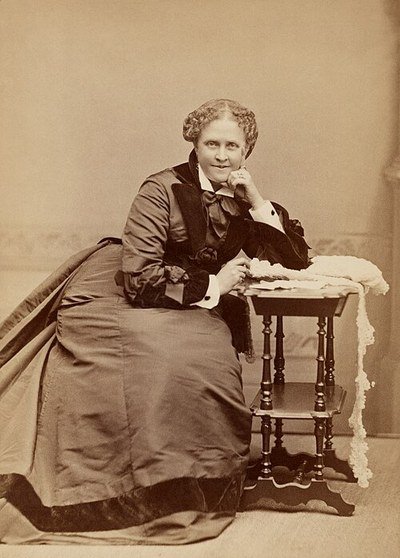
Helen Hunt Jackson (pen name: H.H.; born Helen Maria Fiske; October 15, 1830 – August 12, 1885) was an American poet and writer who became an activist for improved treatment of Native Americans by the United States government. She described the adverse effects of government actions in her history A Century of Dishonor (1881). Her popular novel Ramona (1884) dramatized the federal government's mistreatment of Native Americans in Southern California after the Mexican–American War and attracted considerable attention to her cause. Commercially successful, it was estimated to have been reprinted 300 times, with readers liking its romantic and picturesque qualities more than its political content. The novel was so popular that it attracted many tourists to Southern California who wanted to see places from the book.
Helen Maria Fiske was born in Amherst, Massachusetts, the daughter of Nathan Welby Fiske and Deborah Waterman Vinal Fiske. Her father was a minister, author, and professor of Latin, Greek, and philosophy at Amherst College. Two brothers, Humphrey Washburn Fiske (?–1833) and David Vinal Fiske (1829–1829), died soon after birth. There was also a sister, Anne. The children were raised as Unitarians. Anne became the wife of E. C. Banfield, a federal government official who served as Solicitor of the United States Treasury.
The mother died from consumption in 1844, when Fiske was fourteen. Three years later, the father died. He had provided financially for Fiske's education and arranged for an uncle to care for her. Fiske attended Ipswich Female Seminary and the Abbott Institute, a boarding school in New York City run by Reverend John Stevens Cabot Abbott. She was a classmate of Emily Dickinson, also from Amherst; the two corresponded for the rest of their lives, but few of their letters survived.
Biography adapted from the Wikipedia article “Helen Hunt Jackson”, CC BY-SA. Read it there.