Fernando Pessoa
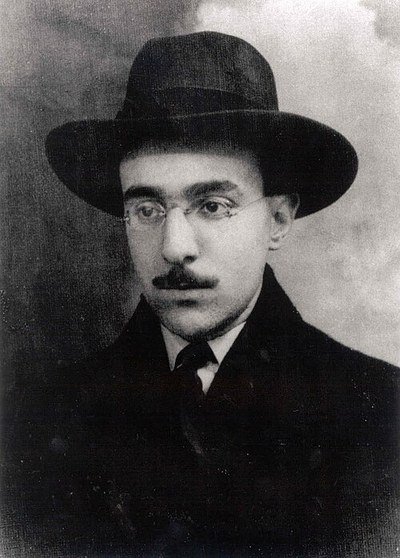
Fernando António Nogueira de Seabra Pessoa (; Portuguese: [fɨɾˈnɐ̃du pɨˈsoɐ]; 13 June 1888 – 30 November 1935) was a Portuguese poet, writer, literary critic, translator, and publisher. He has been described as one of the most significant literary figures of the 20th century and one of the greatest poets in the Portuguese literature. He also wrote in and translated from English and French.
Pessoa was a prolific writer both in his own name and approximately seventy-five other names, of which three stand out: Alberto Caeiro, Álvaro de Campos, and Ricardo Reis. He did not define these as pseudonyms because he felt that this did not capture their true independent intellectual life and instead called them heteronyms, a term he invented. These imaginary figures sometimes held unpopular or extreme views.
Pessoa was born in Lisbon on 13 June 1888. When Pessoa was five, his father, Joaquim de Seabra Pessôa, died of tuberculosis, and less than seven months later his younger brother Jorge, aged one, also died (2 January 1894). After the second marriage of his mother, Maria Magdalena Pinheiro Nogueira, by a proxy wedding to João Miguel dos Santos Rosa, Fernando sailed with his mother for South Africa in early 1896 to join his stepfather, a military officer appointed Portuguese consul in Durban, capital of the former British Colony of Natal.
Biography adapted from the Wikipedia article “Fernando Pessoa”, CC BY-SA. Read it there.