Catullus
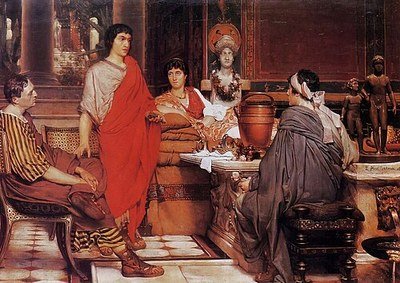
Gaius Valerius Catullus (Classical Latin: [ˈɡaːius waˈlɛrius kaˈtullus]; c. 84 – c. 54 BC), known as Catullus ( kə-TUL-əs), was a Latin neoteric poet of the late Roman Republic. His surviving works remain widely read due to their popularity as teaching tools and because of their personal or sexual themes.
Gāius Valerius Catullus was born to a leading equestrian family of Verona, in Cisalpine Gaul. The social prominence of his family allowed his father to entertain Julius Caesar when he was the Promagistrate (proconsul) of both Gallic provinces. In poem 31, Catullus describes his happy homecoming to the family villa at Sirmio, a peninsula on Lake Garda, near Verona, at a site known today as the Grottoes of Catullus. Catullus or his family also owned a villa near the resort of Tibur (modern Tivoli).
Catullus appears to have spent most of his young adult years in Rome. His friends there included the poets Licinius Calvus and Helvius Cinna, Quintus Hortensius (son of the orator and rival of Cicero), and the biographer Cornelius Nepos, to whom Catullus dedicated a libellus of poems, the relation of which to the extant collection remains a matter of debate. He appears to have been acquainted with the poet Marcus Furius Bibaculus. A number of prominent contemporaries appear in his poetry, including Cicero, Caesar and Pompey. Cicero wrote in scorn about the "new poets", a group that can probably be identified with the circle of Catullus. According to an anecdote preserved by Suetonius, Caesar did not deny that Catullus's lampoons left an indelible stain on his reputation, but when Catullus apologized, he invited the poet for dinner the very same day.
Biography adapted from the Wikipedia article “Catullus”, CC BY-SA. Read it there.