Bjørnstjerne Bjørnson
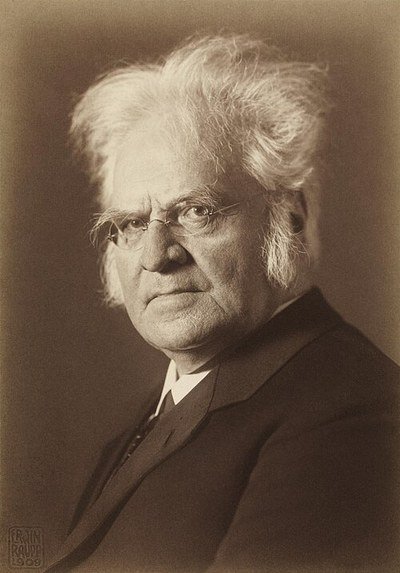
Bjørnstjerne Martinius Bjørnson ( BYURN-sən, Norwegian: [ˈbjø̂ːɳstjæːɳə mɑrˈtiːnɪʉ̂s ˈbjø̂ːɳsɔn]; 8 December 1832 – 26 April 1910) was a Norwegian writer who received the 1903 Nobel Prize in Literature "as a tribute to his noble, magnificent and versatile poetry, which has always been distinguished by both the freshness of its inspiration and the rare purity of its spirit". The first Norwegian Nobel laureate, he was a prolific polemicist and extremely influential in Norwegian public life and Scandinavian cultural debate. Bjørnson is considered to be one of "the four greats" of Norwegian literature, alongside Ibsen, Lie, and Kielland. He is also celebrated for his lyrics to the Norwegian national anthem, "Ja, vi elsker dette landet". The composer Fredrikke Waaler based a composition for voice and piano (Spinnersken) on a text by Bjørnson, as did Anna Teichmüller (Die Prinzessin).
Bjørnson was born at the farmstead of Bjørgan in Kvikne, a secluded village in the Østerdalen district, some 60 miles (97 km) south of Trondheim. In 1837, Bjørnson's father Peder Bjørnson, who was the pastor of Kvikne Municipality, was transferred to the parish of Nesset Municipality, outside Molde in Romsdal. It was in this scenic district that Bjørnson spent his childhood, living at the Nesset Parsonage.
After a few years studying in the neighbouring city Molde, Bjørnson was sent at the age of 17 to Heltberg Latin School (Heltbergs Studentfabrik) in Christiania to prepare for university. This was the same school that trained Ibsen, Lie, and Vinje.
Biography adapted from the Wikipedia article “Bjørnstjerne Bjørnson”, CC BY-SA. Read it there.