Alessandro Manzoni
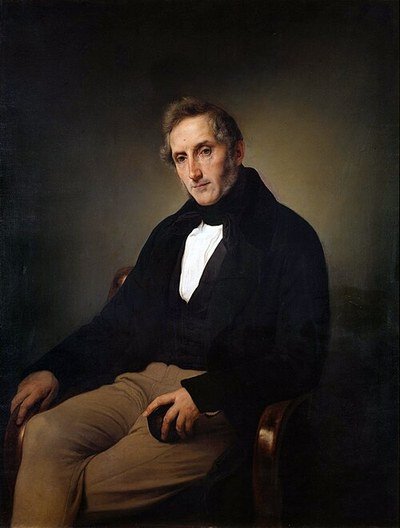
Alessandro Francesco Tommaso Antonio Manzoni (UK: , US: , Italian: [alesˈsandro manˈdzoːni]; 7 March 1785 – 22 May 1873) was an Italian philosopher, poet, playwright, and novelist. He is best known for the novel The Betrothed (Italian: I promessi sposi), generally ranked among the masterpieces of world literature. The novel, published in 1827, is a symbol of the Italian Risorgimento for its patriotic message, and also because it was a fundamental milestone in the development of the modern and unified Italian language.
Manzoni contributed to the stabilization of the modern Italian language and helped to ensure linguistic unity throughout Italy. He was an influential proponent of Liberal Catholicism in Italy. He is also considered one of the three crowns of Romanticism in Italy, along with Ugo Foscolo and Giacomo Leopardi, despite their differences. He is often associated as the moral and cultural leader of the Italian unification with his younger contemporary Leopardi, although his work and thinking often contrast with the latter.
Manzoni was born in Milan, Italy, on 7 March 1785. Pietro, his father, aged about fifty, belonged to an old family of Lecco, originally feudal lords of Barzio, in the Valsassina. His biological father was likely Giovanni Verri, brother of the influential Enlightenment thinkers Pietro and Alessandro Verri, and a habitué, along with his brothers and Giulia Beccaria, of the dazzling liberal Società del Caffè. Manzoni's maternal grandfather, Cesare Beccaria, was a well-known author and philosopher, and his mother Giulia had literary talent as well. The young Manzoni spent his first two years in cascina Costa in Galbiate and he was wet-nursed by Caterina Panzeri, as attested by a memorial tablet affixed in the place. In 1792, his parents broke their marriage and his mother began a relationship with the writer Carlo Imbonati, moving to England and later to Paris.
Biography adapted from the Wikipedia article “Alessandro Manzoni”, CC BY-SA. Read it there.